
How to Start a Painting Business (Even without Experience)
The painting industry has changed a lot in the last few years.
From virtual estimates to higher project prices to labor availability, starting a painting business in 2023 presents new challenges and opportunities to be aware of.
Unlike other industries, the painting trade is relatively simple to enter, making it an easy choice when starting your own company.
I started my painting business in 2012. And today, I help lots of painting companies start and grow their businesses. Below are my tips for starting a painting business. As well as some pros and cons to help you determine if starting a painting business is right for you.
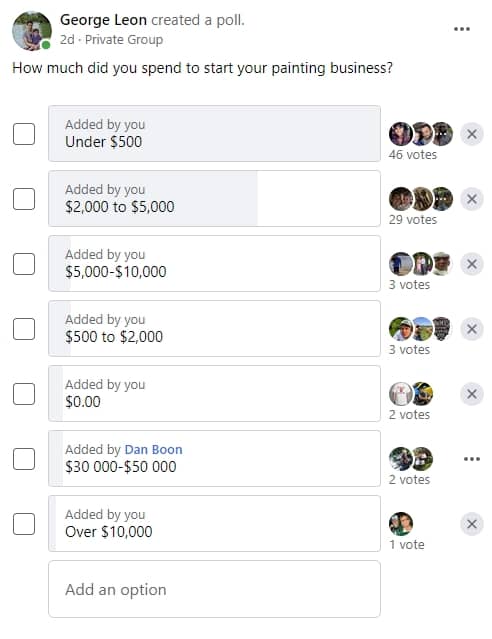
Before we start, look at these Facebook group poll results where I asked, “How much did you spend to start your painting business?”
Step 1: Register a Domain Name
Registering a domain name before registering your official business name will allow you to see what domain names are available. This way, you can have a matching domain name for your business.
I often see people choose a company name first. Then they go and look for a domain name. They will realize there are no matching domain names available. So they have to settle for a domain name that is harder to remember
A good domain name is short, simple, and easy to remember.
Things that make a domain name hard to remember are dash marks that don’t fit naturally, long domain names, having to add unnecessary words to the front or end, or using uncommon domain name endings such as .info.
The best domain names are usually your company name + .com.
You want an optimized domain name because it increases the likelihood of someone visiting your website when they see or hear your domain name. For example, someone might see your domain name on your company vans or yard signs.
Or they might hear it over the phone or in person. If your domain name is simple and easy to remember, there is a greater likelihood they will then visit your website. And thus, a greater possibility that they will become a customer.
I recommend Google Domains as the place to get your domains. The price is very reasonable considering that they give you privacy protection for free. And their system is straightforward to use, as you would expect from any Google product.
The price will be $12 for most available domain names. Some domain endings cost more.
If you are stuck on finding a name for your business, try using a business name generator that can act as a springboard for creativity and also offer unique naming suggestions that you can use.
Costs:
- Low Budget Option: $0.00 – Don’t get a domain name
- Recommended Option: $12.00 – Get a domain name
- Premium Option: $12.00 or more for a premium aftermarket domain name
Step 2: Get a Business Email
You can look more professional to your prospects by using a business email. A business email is an email address that uses your company’s domain name.
You can use a standard email if you’re on a low budget. For a standard email, I recommend Gmail from Google.
For a business email, I recommend Google Workspace.
Costs:
- Low Budget Option: $0.00 – Use a standard email
- Recommended Option: $84.00/year for Google Workspace
Step 3: Register with your Secretary of State
The cost of registering your business entity varies from state to state. You have to renew it every year. Expect to pay between $50 to $500 per year. Some states have extra taxes, such as California’s Franchise Tax.
Costs:
- Low Budget Option: $150 – average (depends on state)
- Premium Option: $300 – Register with a business consultant in a US state that offers privacy and charging order protections.
Step 4: Apply for an EIN (Employer ID)
After registering your business with your state, you can file for an Employer Identification Number (EIN). An EIN allows you to file taxes and create a business bank account.
The IRS offers free EINs on its website.
Costs:
- Free from the IRS: $0.00
Step 5: Open a Business Bank Account
Many banks let you open a business bank account for free. But they might have ongoing monthly fees. You can usually avoid the fees by meeting some basic requirements, such as having a certain amount in your account (usually less than $500).
Costs:
- Free from most banks: $0.00
Step 6: Get a Credit Card Processor
I recommend using software that doesn’t charge you to set up the service. These types of software will instead take a small fee from every transaction. Even if you buy a physical point of sale system, they will still charge you a fee for each transaction.
Software-based systems usually send your customer an email containing a payment link.
I see no benefit in buying a physical system that lets customers swipe their cards.
Costs:
- Use an online service with no upfront costs: $0.00
Step 7: Get Insurance
Insurance requirements and costs vary from state to state. Fees are usually based on projected revenue, services offered, employee count, whether you plan on hiring painting subcontractors, and whether you have your subcontractors sign a painting subcontractor agreement to protect yourself.
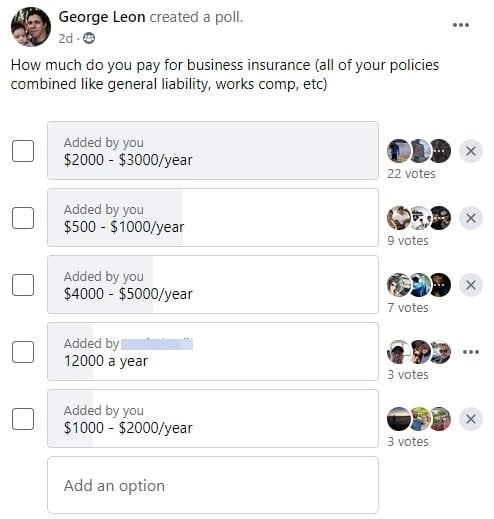
I posted a poll on Facebook asking what other painting contractors pay yearly for insurance. Here are the results:
Many painters pay under $1000 per year, but the largest group pays between $2000 to $3000 per year.
Costs:
- Budget Option: $600.00/yr – Low-cost insurance – depends on the state.
- Recommended Option: $2500/yr – Average according to my FB poll
- Premium Option: $5000/yr – Or more for better quality insurance
Step 8: Set Up Bookkeeping
You can track every transaction on a spreadsheet if you want to avoid bookkeeping costs. Make sure to have a field for the category to distinguish the types of expenses, such as ‘cost of goods sold’ or ‘marketing’.
To make your life easier, you can buy bookkeeping and accounting software. Such software can connect with your bank account to help you track expenses.
I recommend a cloud-based program to avoid the inconvenience of installing anything on your computer. I have seen that these programs typically cost $20 to $30 per month for the most basic versions.
If you want to save as much time as possible, hire an accountant to do your monthly bookkeeping. This service costs about $300 to $600 per month. But you usually get to ask them questions, which is helpful during your first few years.
Costs:
- Low Budget Option: $0.00 – Do your own bookkeeping
- Recommended Option: $300/yr – Cloud-based accounting software
- Premium Option: $3600/yr – Bookkeeper retainer
Step 9: Prepare for Taxes
If you use accounting software for your bookkeeping, check to see if they offer tax prep reports or support.
Or you can use your accountant that does your monthly bookkeeping. Tax prep will typically be a separate cost and won’t be included in the bookkeeping fee. Expect to pay $500 to $3000 for tax prep if you hire an accountant.
Costs:
- Low Budget Option: $0.00 – Do your own tax prep
- Recommended Option: $300/yr – Cloud-based accounting software
- Premium Option: $1000 – Hire an accountant for tax prep
Step 10: Get a Business Phone Number
To avoid any phone costs, you can use your personal phone number. You can also try a free app such as Google Voice.
You can also invest in a bare-bones work phone for about $150. I would plan on replacing it every two years, but hopefully, you can get more out of it. So remember to annualize your cost to $75 per year if you pay $150 for a phone that will last two years.
I recommend Google Fi for your phone plan. I pay about $40 for each line on my plan.
Costs:
- Low Budget Option: $0.00 – Use an existing phone
- Recommended Option: $555/yr – Buy a $150 phone every 2 years + $480/yr plan
Step 11: Buy T-Shirts & Hoodies
Branded T-shirts and hoodies will make your company look more professional and boost team morale.
At a minimum, I would ensure each painter has five shirts (one for each weekday). Then they can do weekend laundry and wear the same five shirts the following week. Plan on replacing those five shirts every three months.
That comes out to 20 shirts per painter per year. Costs per shirt will vary from $6 to $15 per shirt. Hoodies will be between $20 to $60 per hoodie.
Costs:
- Low Budget Option: $0.00 – Don’t buy branded T-shirts
- Recommended Option: $200.00 – per year per painter
Step 12: Set Up a Website
Owning and maintaining a website involves the following costs:
- Designing and Developing the Website
- Designing a website can be free if you do it yourself. You can make a free website from your Google Business Profile. You’ll still have to pay for the domain name, but it’s a great free platform.
- If you want a high-performing website that converts visitors into customers at a high rate, consider hiring a website design agency. A website design agency will help you define your user personas and brand attributes to help you build a connection with your target audience. They’ll offer stylescapes, wireframes, sales copywriting, visual design, and scalable development to help you get the most out of your website. Pro tip: Speak with an agency specializing in websites for painting contractors.
- Ongoing Fees
- Hosting is the most essential and unavoidable cost. A website is a collection of files. Those files need to be hosted on an online server to be on the internet.
- a CDN (content delivery network) is an optional ongoing cost that will make your website faster. This increases the user experience, which will, in turn, increase your website’s conversion rate.
- Website Maintenance is another unavoidable part of having a website. Code, plugins, and APIs can all get outdated, making your website vulnerable to hacking, performance drops, and broken features. Maintenance might also include changing the content as needed, such as updating company hours, service offerings, etc.
- Search Engine Optimization (SEO): You can optimize your website to get found on Google for relevant keywords such as “cabinet painting contractor New York” or “deck staining service Los Angeles”. You can do SEO yourself or hire an SEO agency for painters.
- Advanced Website Features include appointment scheduling widgets that can schedule a painting estimate online, estimate generators, and painting cost calculators.
Costs:
- Low Budget Option: $0.00 – Don’t buy a website or make one yourself.
- Recommended Option: Hiring an agency for $1000 to $3000
Other Considerations
The above costs are overhead costs. Another type of cost is “Costs of Goods Sold” (CoGS). CoGS are job-related costs such as supplies, materials, payroll, subcontractors, gas, and other travel expenses.
Costs of Goods Sold are recouped on each job (assuming the job is profitable), so I did not include them above. The same is true for advertising costs.
I also didn’t include equipment costs because these costs will vary from company to company based on your services and team size. Many companies even hire painting subcontractors that supply their equipment.
As you can see, compared to other types of businesses, the start-up costs for painting are low, which is one of the reasons that I think it’s a good idea to start a painting business.
The Pros of Starting a Painting Business
High Profit Margins
Profit is key to starting a business. A major benefit of the painting industry is that painting jobs have high profits.
Whether your painting company specializes in commercial painting contracts, residential jobs, or industrial painting, the profit margins for painting help cushion your bottom line and keep cash flowing into your bank account.
While painting jobs are profitable, it’s important to note that new construction doesn’t have great profit margins. But you can make it up in volume as new construction projects can often involve an entire subdivision of homes or apartment complex of buildings.
Market Size
One of the biggest reasons why starting a painting business is a good idea is because there is a large market for painting. And the painting industry is growing every year.
A few painting submarkets include new build residential construction, repainting existing homes, and industrial paint jobs.
You can also bid on commercial painting jobs for offices, apartment buildings, industrial facilities, and more.
You can have your painting company specialize in one of these niche markets, or you can be a jack of all trades offering residential and commercial painting services.
While painting isn’t a service that people will need year after year, once you’re in with a homeowner or commercial property manager, you will likely be their go-to painting company whenever they need painting services moving forward.
Low Start-Up Costs
When going into business on your own, your goal is to turn a profit as quickly as possible. In some industries, this can take months (or years!) before you make a profit or begin to grow your painting business.
However, start-up costs for the painting industry are low, meaning you can open a painting business with a low budget and turn that into an immediate profit with just a few clients.
Easy to Learn
Starting a business is an exciting time. You’ve probably read dozens of books on being an entrepreneur, and you think you have the chops to succeed. If you’re interested in starting a painting company, you’re in luck.
Understanding the painting business is relatively simple and easy for someone with limited painting experience to pick up.
You don’t need to have a background in painting wrap your head around how the painting business works and get started. This makes it relatively easy to start a painting business with no experience.
In some states, you might need a contractor’s license to paint houses but in others, you won’t even have to file a license application.
As the owner of the painting company, you need to be able to help direct the employee on the job. What prep work needs to be done? What materials need to be used? How can we completely satisfy the customer?
If you can answer these three questions for each type of paint job your company offers (interior residential homes, exterior residential homes, etc.), you’ll have mastered the most important skills needed to lead a successful painting company
Easy Competition
If you Google “painting companies near me,” it might seem like there are a lot. But since the painting industry is easy to break into, many competitors have subpar customer service, marketing strategies, and operational processes.
So while the competition exists, it’s easy for you to stand out by offering a better service.
If you read your competitor’s reviews (if they even have reviews), you’ll find that they aren’t good at communicating with their clients, they’re always running fashionably late, they provide subpar paint jobs, or don’t reply back to their clients.
On the business side of things, they often don’t understand how to run a business, lack a streamlined sales process, and ignore important marketing channels.
It’s easy to say you’re a painter, but it’s much harder to prove that you’re a professional service provider. If you can get your name out there as a reputable painting company in your area, you’ll be able to turn a decent profit quickly and stand out from the competition.
The Cons of Starting Your Own Painting Business
Effort
If you’re looking for a shortcut to make the most amount of money possible by putting in the least amount of time and effort, then starting a painting company isn’t the right choice for you. Painting isn’t going to be a fast track to success—but with time and effort, you will be successful.
If you’re becoming a painting contractor (or any other business), you should expect a tight work schedule and put in a lot of time and hard work to get the company successfully off the ground.
Hard Work
Do you like to work hard? Are you ready to pour your heart and soul into your painting company? Starting any business is difficult, but for many, the benefits outweigh any of the trials and tribulations.
After years of hard work, you’ll be rewarded with a job in which you can control your time and income—but without putting the time in the front end to establish your reputation and efficiently get painting contracts, starting a painting company isn’t for you.
Failure
As a business owner, you can’t be afraid to fail. In fact, you need to be able to accept failures and be willing to learn from your mistakes. If you can’t get back up again after stumbling a few times along the way, you won’t be able to succeed in the painting business.
Responsibility
When the clock hits 5 pm, you can’t just check out mentally and forget about work anymore. As the owner of the business, you are responsible for everything, even after the workday is over.
It can be extremely difficult to find the balance between home life and work-life now that you are 100% responsible for your employees, clients, and everything in between.
What If I Have No Experience?
If you have the itch to start your own company and be your own boss, starting a painting company might be the solution you’ve been looking for.
With low startup capital and operational costs, you have the opportunity to build a business from scratch that has high demand and offers a good return on investment — all without needing much painting experience of your own.
Whether you’ve painted a few homes in the past or have never picked up a paintbrush, you can still be successful in the painting industry.
With a sound business plan in place, you’ll be able to create a successful painting company from scratch and learn the ropes along the way. If you’re new to the painting industry, we’ve put together the following list to help you start a painting company no matter your level of experience.
Hone Your Technical Skills
There’s a low barrier of entry to get your foot in the door, but the better your technique, the happier your clients will be — and happy clients lead to referrals, reviews, and sales!
Before opening your company, take some time to improve your skills and understand the ins and outs of painting a residential or commercial property. The Internet is full of valuable resources that can teach you new techniques.
Additionally, you can ask to shadow a local painter to get hands-on experience. Having a sound understanding of the best types of paint to use, what materials are worth spending more money on, and different techniques to improve your craft will ensure you leave all your customers with a job well done.
Prepare for Your First Customer
You need to prepare how you’re going to schedule new appointments and streamline communication with your customers.
Setting up an efficient process before starting will help you spend more time on the parts of the business that bring in the most revenue. Consider setting up a process for:
- Appointment Scheduling – How are you going to manage scheduling appointments? Do prospective customers need to call to book? Will they need to schedule a consultation first? Can they schedule through an appointment booking tool on your company website? Determining these methods now will make it easier in the long run.
- Quoting and Invoicing – As a business, you must keep track of all the money coming in and going out. When prospective customers reach out about scheduling a paint job, they will be looking for a painting estimate. Then, once a job is complete, how will you invoice your painting customers? You need to use a tool that is easy for you to reference in the future if you ever need to look back at customer or financial records.
Choose Your Service Offerings
There are many painting services you can offer, but when you’re first starting (especially with limited experience), it’s best to start with a few core offerings. Before narrowing down your service offerings, you should first determine who your ideal customer is.
Are you going to market to residential customers or advertise for commercial painting leads? Your customer type will help you narrow down which services should be the core of your business.
Along with choosing your services, you need to price out your services and labor as well. Study your competitor’s residential and commercial painting prices. Overcharging for a job will leave prospective customers running to your competitors.
Undercharging for a job will make it hard for you to see a return on your investment. Analyze your local market to determine what the going rates are for similar service offerings and put together a competitive offerings menu that will cushion your bottom line.
Frequently Asked Questions
How Much Does It Cost To Start A Painting Business?
It costs $3000 to $5000 to start a painting business in the US. Costs include a domain name, business email, registering with your secretary of state, credit card processor, insurance, bookkeeping, tax preparation, phones, attire, website, tools, supplies, and equipment.
What Equipment Do I Need to Start a Painting Business?
Ladders, brushes, rollers and trays, painter’s tape, drop cloths, caulk, hand-masker, sandpaper, wire brush, spray machine, pressure washer, scaffolding.
Is a Painting Business Profitable?
Yes, most painting businesses are profitable thanks to low startup costs and high profit margins.
If your number one goal as a small business owner is to be profitable, the painting industry is a perfect choice for you. Because most jobs have high profit margins, you can rest easy knowing that each job you do will help cushion your company’s bottom line.
Painting is one of those services that nearly everyone is going to need at some point in their lives. From new builds to home renovations, there will always be opportunities for you to close.
With so much demand for painting services, you can have a strong pipeline of leads with the right marketing campaigns in place.
Your annual revenue and profits will be greatly impacted by a few things — the number of jobs you take, the size of your team, your market, the services you offer, and how good you are at providing high-quality work. All of these need to be factored in when setting your growth goals.

Leave a Reply